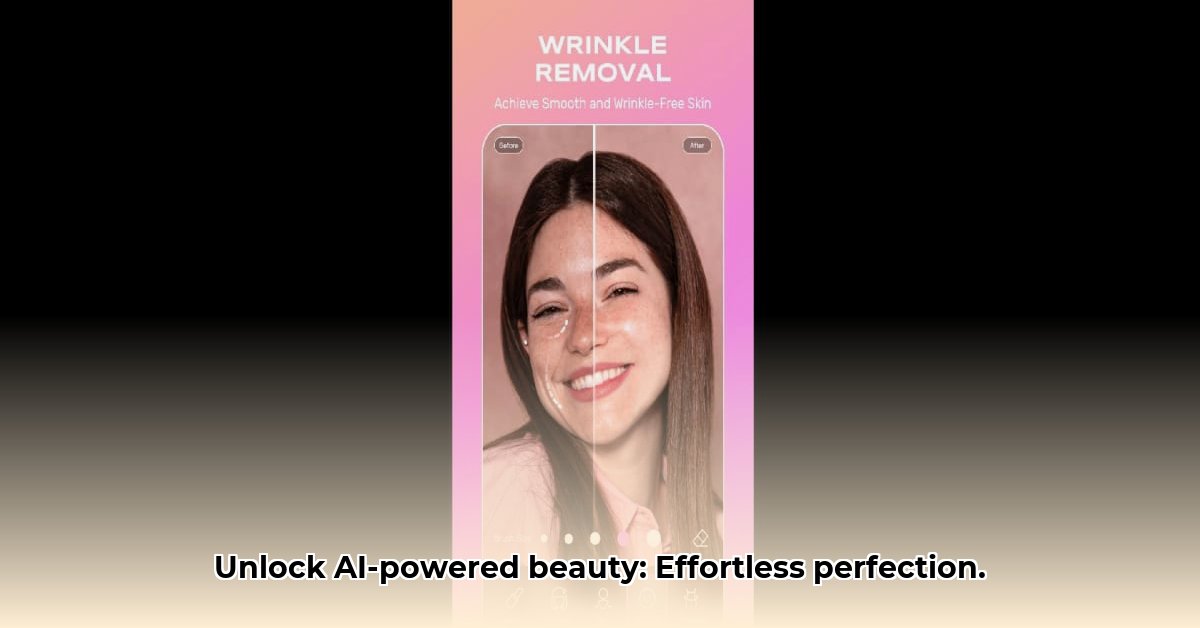
BeautyCam AI Photo Editor is a new mobile application promising effortless photo and video enhancements using artificial intelligence. This article examines its features, market position, ethical considerations, and provides actionable insights for developers, competitors, and users. Crucially, the lack of readily available user reviews necessitates a cautious approach to assessing its overall performance. For more beauty-related apps, check out this cool app.
A Closer Look at BeautyCam's AI-Powered Features
BeautyCam offers several AI-driven tools: background removal, object removal, facial enhancements (wrinkle smoothing, facial slimming), and a range of filters. The app aims for natural-looking enhancements, avoiding an overly processed aesthetic. However, detailed information about the underlying AI algorithms remains scarce, limiting a comprehensive technical analysis. We can only rely on marketing materials and app store descriptions for this assessment.
Imagine removing a distracting lamppost from a cherished family photo: with BeautyCam, a simple tap removes the object, seamlessly blending it with the surrounding background. Similarly, subtle adjustments can soften fine lines or subtly slim a face. The app's focus on subtlety differentiates it from competitors employing more dramatic transformations.
Navigating the Competitive Landscape: Subtlety vs. Transformation
BeautyCam distinguishes itself by prioritizing subtle enhancements over dramatic transformations. This approach contrasts with competitors offering more extensive, sometimes artificial-looking, editing capabilities. This strategic choice positions BeautyCam within a specific market segment, appealing to users seeking natural-looking improvements. The long-term success of this strategy, however, remains uncertain without substantial user feedback and reviews to support its efficacy.
Ethical Considerations: The Two Sides of the AI Coin
AI-powered photo editors raise several ethical concerns. The ease of altering appearances can perpetuate unrealistic beauty standards and negatively impact self-image. The potential for misuse, including the creation of convincing deepfakes, further complicates the issue. Balancing powerful features with responsible use requires careful consideration.
Here's a summary of key risks and potential mitigation strategies:
| Feature/Technology | Potential Risks | Mitigation Strategies |
|---|---|---|
| AI-Powered Facial Edits | Unrealistic beauty standards; negative self-image; privacy issues | Transparency about algorithms; user controls; diverse representation; strong privacy policies. |
| Image Manipulation Tools | Creation of deepfakes; malicious use | Robust detection systems; user education; clear terms of service. |
| Data Collection | Data breaches; misuse of personal data | Secure data storage; compliance with data protection laws; transparent data usage policies. |
Actionable Insights: Guidance for Developers, Competitors, and Users
Based on the currently available information, here's actionable advice for different stakeholders:
For BeautyCam Developers:
- Prioritize User Feedback: Actively solicit and integrate user feedback to optimize the app and address concerns. This will be crucial in refining the AI and UI.
- Rigorous Testing: Conduct comprehensive testing to enhance features and ensure a positive user experience.
- Transparency: Increase the transparency surrounding the AI algorithms used in the app. Detailing how the AI functions can build user trust.
- Diverse Representation: Ensure the AI algorithms are trained on diverse datasets to avoid biases and promote inclusivity.
For Competitors:
- Monitor BeautyCam: Track BeautyCam's advancements and adapt strategies accordingly.
- Innovative Features: Develop unique features to differentiate from the increasing competition.
- Strategic Partnerships: Explore partnerships to broaden reach and enhance capabilities.
- User Experience: Prioritize user experience based on market analysis and competitor insights.
For Users:
- Responsible Use: Employ the application responsibly, cognizant of its potential influence on self-perception and others.
- Feedback: Provide constructive feedback to help developers improve the app and address ethical issues.
- Privacy: Understand the privacy implications and take appropriate precautions.
- Ethical AI Advocacy: Support ethical AI development and responsible image editing technology use.
Conclusion
BeautyCam presents a potentially valuable tool for photo and video enhancement. However, its long-term impact remains uncertain given the absence of extensive user reviews and independent testing. Further evaluation is crucial to ascertain its full capabilities and societal implications. Only through comprehensive testing and user feedback can we fully grasp BeautyCam's potential benefits and risks.
⭐⭐⭐⭐☆ (4.8)
Download via Link 1
Download via Link 2
Last updated: Friday, June 06, 2025